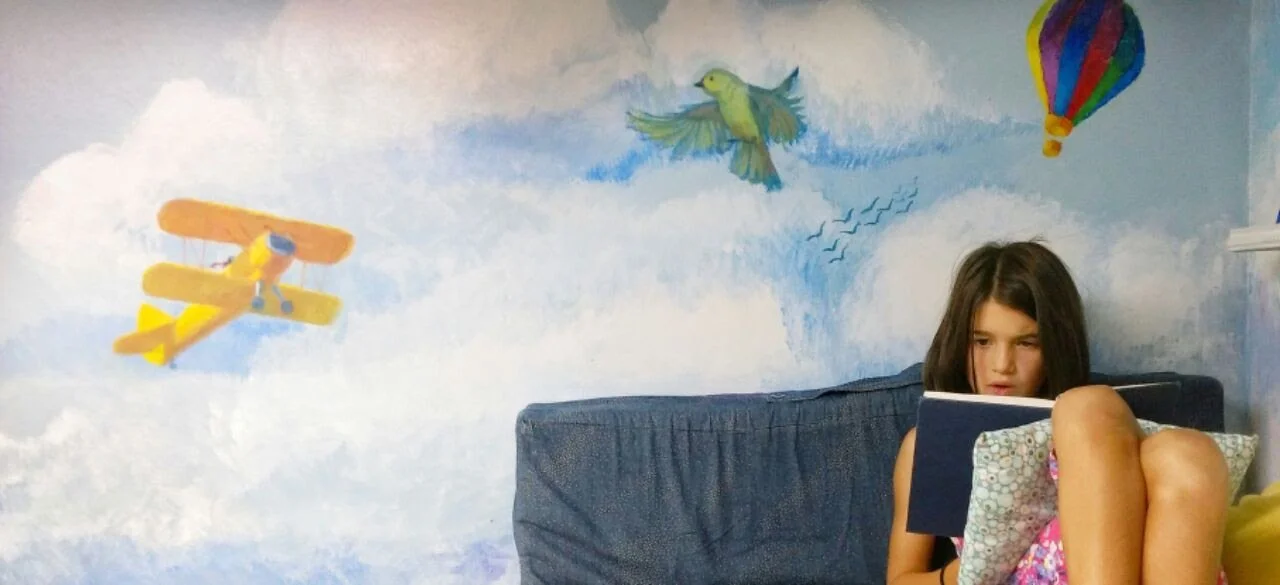
Curriculum: Reading
Having the ability and desire to read are crucial to all learning.
NCCL’s reading program teaches students the skills to become fluent, critical readers and provides a community where reading to learn and reading for enjoyment are highly valued.
“It is not enough to simply teach children to read; we have to give them something worth reading. Something that will stretch their imaginations—something that will help them make sense of their own lives and encourage them to reach out toward people whose lives are quite different from their own.” —Katherine Patterson
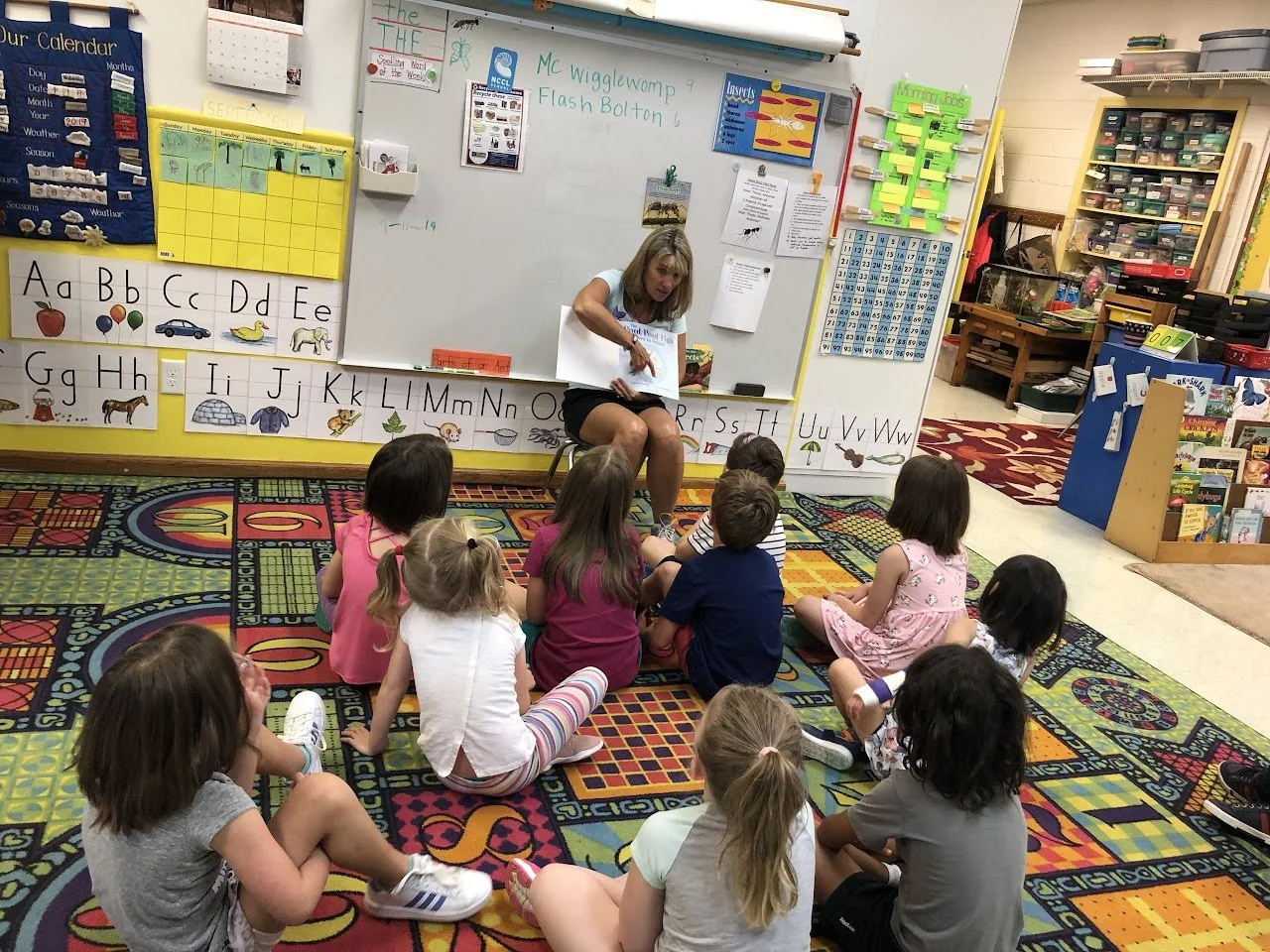
Group 1 Reading
Group 1 uses a multi-sensory phonics based approach to instruction. Kindergarten students in Group 1 are working on letter and sound identification. We work to develop pre-reading skills through rhyming activities, matching, counting sounds, story telling, sequencing activities, learning letter names and sounds and how to blend them into words. Students take time to listen to stories and take picture walks through books. They begin building a sight-word vocabulary as well.
As the students progress they begin examining different spelling rules that change the sounds of letters and words. Acting as word detectives, they work to discover the rules. There are frequent activities sorting words by their common traits, reading and spelling words with a variety of games and reading short stories that contain the words being taught. All these experiences help the students develop skills to sound out words when reading and spelling on their own.
Games chants and songs are often used to help children internalize this knowledge. ("q and u stick together like glue!")
Fluency and comprehension are developed during quiet reading time, when children are guided to choose from a wide selection of literature that is appropriate to their reading level. Once students begin decoding words on their own we begin to work individually with each child, listening to them read aloud, providing mini-lessons on needed skills.
The classroom is filled with books and children are excited to read fiction, non-fiction, and poetry. Children are eager to discuss books, authors, and stories they enjoy. We are developing a community of readers.
Writing stories and sharing their writing with the class reinforces the spelling and reading instruction.
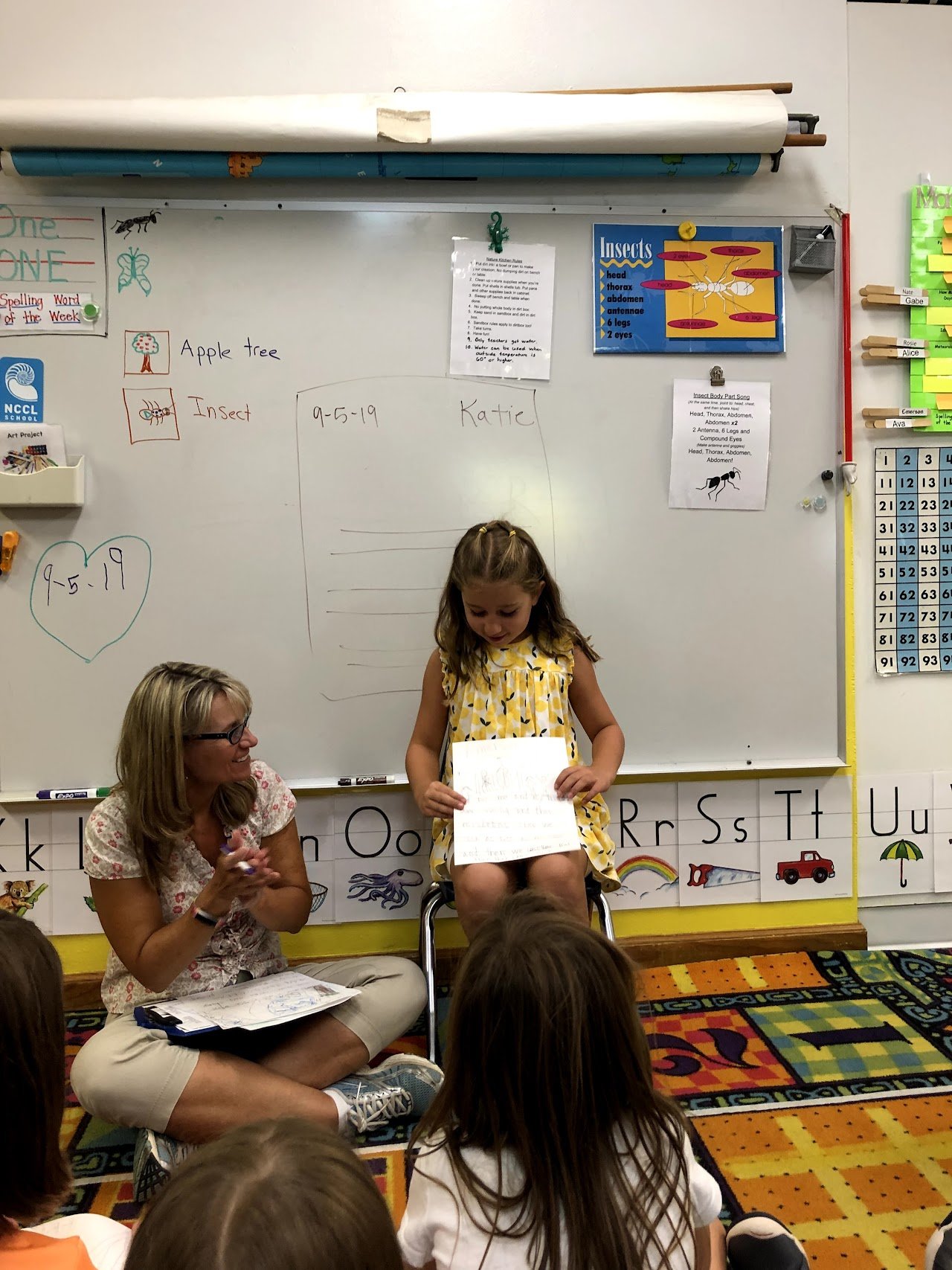
Group 2 Reading
In Group 2, reading makes the transition from learning to read to reading to learn. As children enter Group 2, reading skills vary considerably. Some children are working to decode words, while others have gained fluency. By the second year in Group 2, the majority of the children are fluent readers.
In Group 2 we take several approaches to teaching reading. After an initial assessment, where we read with each child, using several books of different levels, we assign children to reading groups. These groups may be changed as needs be, through the year. At first, children are assigned group books, where one reading group will all read the same book. We spend time reading together, but children also read independently, reading assigned chapters. Children who are still primarily working on decoding will spend more time reading aloud in a group. As children gain fluency, they read silently, but join in discussion groups. However, we have all children read aloud routinely to check fluency and accuracy.
We have a variety reading activities to help children become engaged with the book being read, to help them learn reading and writing conventions, to aid comprehension, and to prepare children to discuss what they have read.
To support discussion we use reader’s notebooks in which children answer questions, write summaries or make comments; children make posters about what they are reading; write ‘ads’ to sell their book, and write more conventional reports.
We try to provide a wide variety of reading material that includes fiction, fantasy, history and science among other topics. We read at least three days a week, during a 45 minute class. Each group reads about five to six books a year as part of the group. Although reading activities permeate our day, focused reading is a critical part of our curriculum.